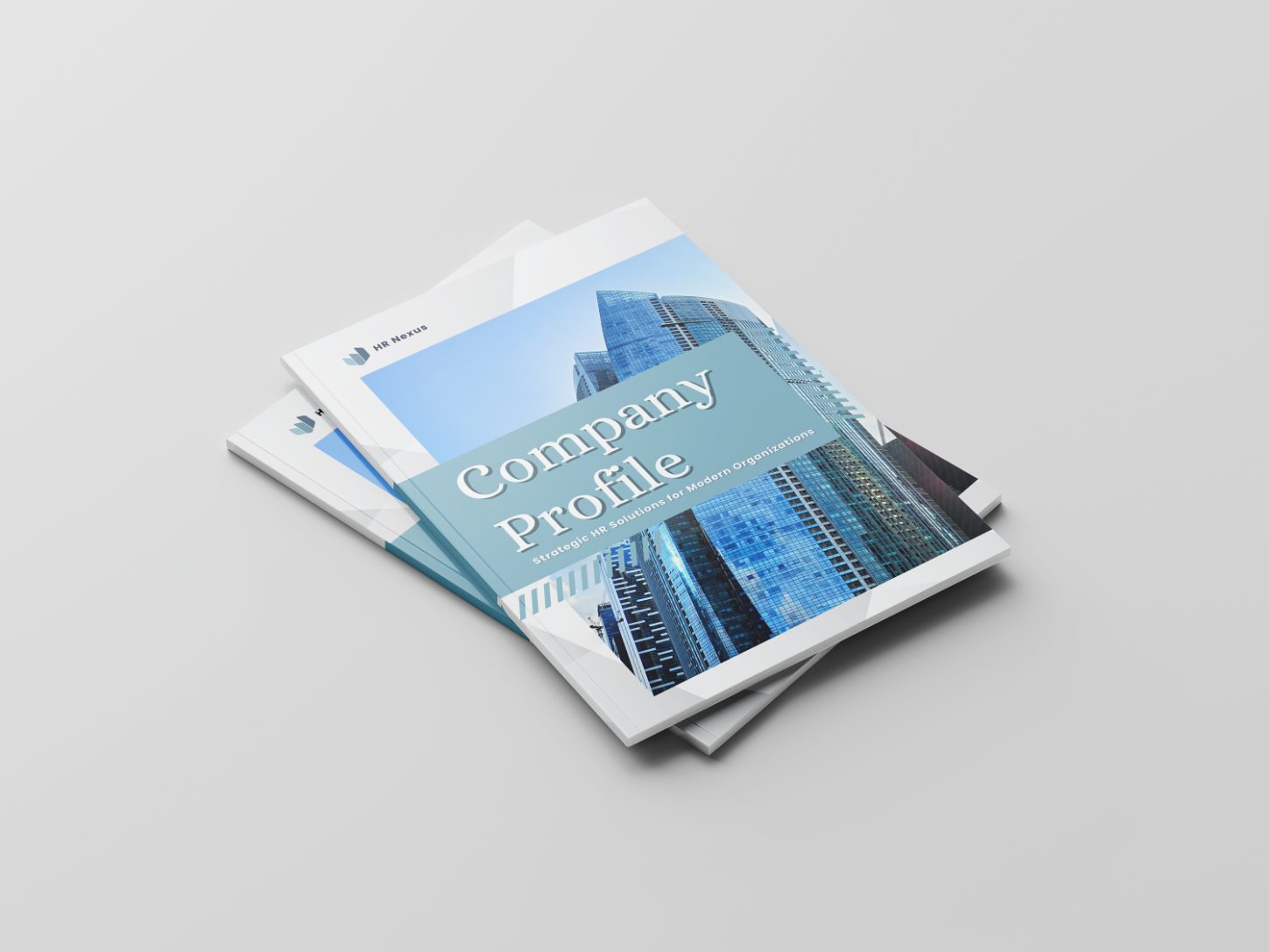
Professional Company Profile: Structure & Strategy Guide
A strategic guide to creating a company profile that builds trust and positions your brand professionally.
Introduction
A corporate company profile is a strategic communication tool that reflects an organization’s identity, positioning, operational maturity, and long-term vision. In executive environments, where decisions rely on clarity and credibility, a well-developed company profile supports stakeholder engagement and provides a consolidated overview of the company’s capabilities.
The Strategic Role of a Corporate Company Profile
A corporate company profile serves multiple strategic functions beyond basic information sharing:
- Establishing organizational credibility: Projects a professional image to clients, investors, and partners. - Supporting business development: Enhances proposals, presentations, and partnership discussions. - Strengthening tender and procurement submissions: Provides structured documentation for institutional requirements. - Standardizing corporate communication: Ensures consistent messaging across departments. - Reinforcing brand positioning: Clearly articulates market differentiation and organizational values.
Unlike marketing brochures, which emphasize persuasion, corporate company profiles focus on clarity, accuracy, and strategic representation. A professional profile communicates your organization’s value without embellishment, ensuring decision-makers grasp your core competencies quickly.
Key Components of a Corporate Company Profile
1. Executive Overview
A concise summary presenting:
- Legal name and corporate structure.
- Year of establishment and milestones.
- Geographic presence and key markets.
- Core areas of expertise and service offerings.
- Market positioning and competitive context.
The executive overview should allow readers to understand the company in minutes, creating a strong first impression.
2. Corporate Governance and Leadership
This section establishes transparency and organizational maturity:
- Leadership and management hierarchy.
- Board or executive management overview.
- Compliance and regulatory adherence.
- Corporate governance model.
Demonstrating governance practices builds trust with institutional stakeholders and reflects operational reliability.
3. Vision, Mission, and Strategic Direction
Corporate profiles must articulate long-term objectives and guiding principles:
- Vision: The organization’s aspirational future. - Mission: The purpose and operational focus. - Strategic Pillars: Key priorities guiding growth and decision-making.
Clear articulation of strategy conveys direction and professionalism, differentiating the organization from competitors.
4. Core Services and Capabilities
Detail services or product offerings in a structured, executive-friendly manner:
- Group services into categories.
- Focus on measurable outcomes.
- Highlight specialized expertise or proprietary methodologies.
- Emphasize efficiency, reliability, and client impact.
Avoid overly promotional language; clarity and relevance are paramount.
5. Operational Approach and Methodology
A professional company profile demonstrates organizational processes:
- Project management frameworks and workflows.
- Quality assurance and risk management protocols.
- Delivery models and client engagement practices.
- Compliance with industry standards and certifications.
This section reassures potential partners or investors of reliability and procedural excellence.
6. Portfolio, Case Studies, and Key Clients
Evidence strengthens credibility:
- Showcase notable projects or partnerships.
- Highlight client industries and achievements.
- Include measurable results or outcomes where possible.
Maintaining confidentiality is essential; share only information that positions the company effectively without disclosing sensitive data.
7. Competitive Differentiation
Clearly define what sets the organization apart:
- Specialized expertise or niche services.
- Industry accreditations or certifications.
- Geographic reach and scalability.
- Technology or innovation capabilities.
- Proven operational track record.
- Differentiate with facts, not generic claim.
8. Corporate Values, Culture, and Social Responsibility
- Ethical standards and integrity.
- Commitment to sustainability and ESG practices.
- Talent development and professional growth.
- Community engagement or social responsibility initiatives.
9. Design and Presentation Standards
In corporate communications, presentation is as important as content. A professional design ensures clarity, readability, and executive appeal:
- Visual Hierarchy: Distinct headings, subheadings, and body text sizes. - Typography: Consistent, professional fonts (maximum 2–3). - Color Palette: Align with corporate branding; avoid excessive colors. - White Space: Ensures readability and a premium, uncluttered appearance. - Infographics and Data Visualization: Clean, accurate, and visually consistent. - Consistency Across Pages: Margins, typography, and layout must remain uniform.
10.Common Pitfalls to Avoid
Many corporate profiles fail due to avoidable errors:
- Overly verbose content.
- Generic statements lacking evidence.
- Low-quality or inconsistent imagery.
- Confusing structure or weak hierarchy. -
Focusing on history instead of current value.
11.Tips for Executive-Level Impact
- Concise Writing: Focus on relevant, decision-making information. - Data-Driven Proof: Include KPIs, metrics, and measurable outcomes. - Structured Storytelling: Lead the reader logically through company strengths. - Regular Updates: Reflect growth, new services, and leadership changes. - Consistency in Tone: Maintain a professional, executive voice throughout.
These approaches ensure the profile resonates with corporate stakeholders and institutional audiences.
12.Maintaining and Updating Your Company Profile
A corporate profile is a living document. Regular review ensures alignment with:
- Strategic shifts and expansions.
- Leadership and team updates.
- Service or product portfolio changes.
- Market developments and achievements.
An up-to-date profile reinforces credibility and serves as a consistent communication tool.
Conclusion
- A corporate company profile is a strategic representation of identity, capabilities, and governance.
- When executed with precision and professional design, it supports executive communications, builds trust, and positions the company for sustainable growth.
- Attention to clarity, structure, and presentation transforms the profile from a static document into a key business asset.