Strategic Brochure Design: Structured Corporate Communication That Strengthens Brand Positioning
Introduction
A brochure is not merely a printed document. It is a structured corporate communication tool designed to present information with clarity, reinforce brand positioning, and support business development.
Unlike short promotional materials that focus on immediate conversion, a professionally developed brochure delivers depth. It organizes complex information into a refined, controlled format that enhances credibility and strengthens stakeholder perception.
When executed strategically, a brochure becomes a long-term brand asset — not just a design piece.
The Strategic Role of a Brochure
In corporate environments, brochures serve as controlled narrative documents. They allow organizations to present structured information while maintaining visual and messaging discipline.
A well-developed brochure supports:
- Corporate positioning.
- Sales meetings and presentations.
- Product or service explanation.
- Stakeholder communication.
- Institutional credibility.
- Competitive differentiation.
It functions as a leave-behind asset that continues representing the organization long after a meeting concludes.
Defining the Objective Before Development
Strategic clarity must precede design.
A professional brochure answers key questions:
- Who is the intended audience?
- What level of detail is required?
- Is the focus corporate, product-based, or service-driven?
- What action should the reader take after reviewing it?
Without defined objectives, brochures often become overloaded and unfocused. Structure is driven by purpose.
Types of Corporate Brochures
Different communication goals require different formats:
- Corporate Brochure: Presents company overview, mission, services, strengths, and positioning.
- Product Brochure: Highlights product features, technical specifications, performance advantages, and differentiators.
- Service Portfolio Brochure: Explains service categories, methodologies, workflows, and measurable outcomes. - Institutional or Investment Brochure:Designed for stakeholders, partners, or investors, emphasizing governance, scale, and long-term stability.
Each format requires tailored messaging architecture and content hierarchy.
Core Components of a High-Impact Brochure
1. Structured Cover
The cover establishes first impression and brand tone.
It must reflect:
Credibility increases when information is structured and verifiable.
6. Clear and Structured Call-to-Action
Even informational brochures require direction.
Common CTAs include:
- Contact our team.
- Request consultation.
- Schedule a meeting.
- Visit our website.
Without a defined next step, engagement momentum is lost.
Visual Architecture & Layout Discipline
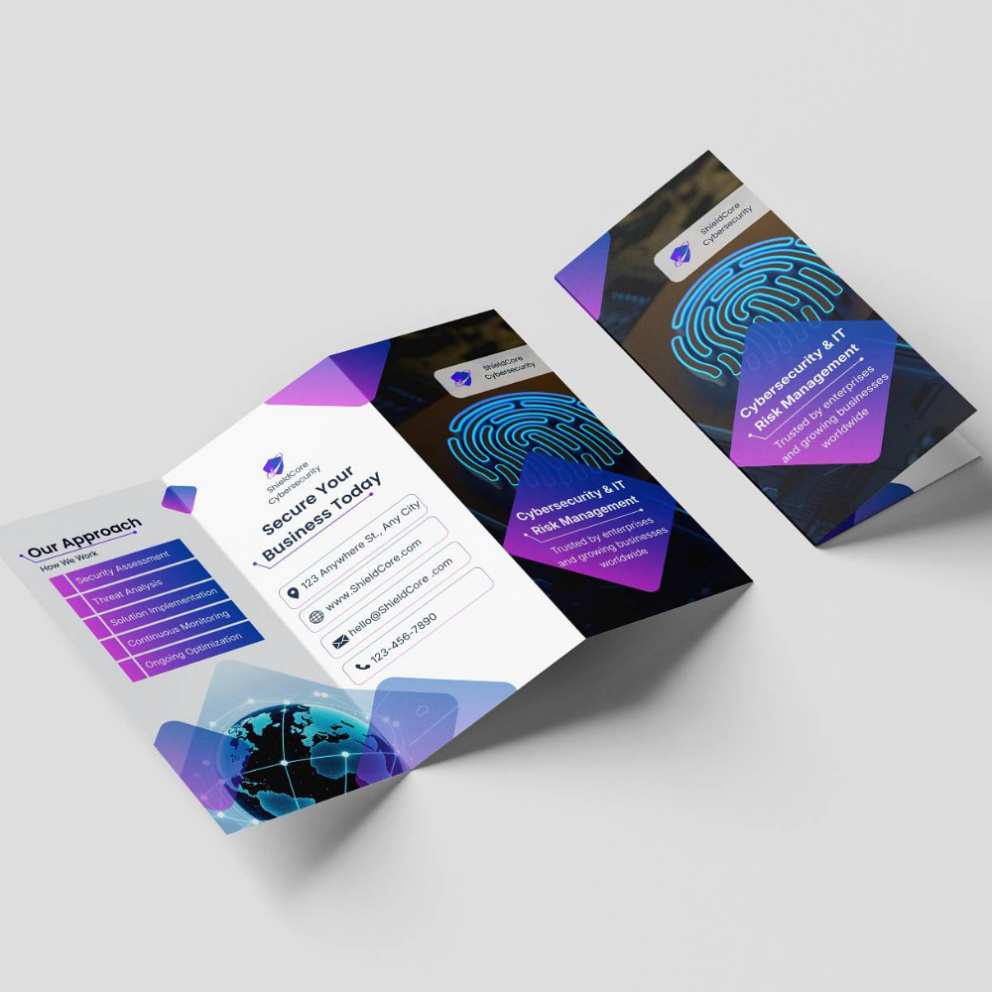
Professional brochure design relies on structured visual systems:
- Consistent typography hierarchy.
- Controlled color palette aligned with brand.
- Clear grid alignment.
- Balanced white space.
- Logical content flow.
- Cohesive iconography.
Over-design reduces seriousness. A corporate brochure should feel refined, structured, and confident.
Print & Production Standards
Production quality directly influences perception.
Professional print preparation includes:
- 300 DPI image resolution.
- CMYK color mode for print accuracy.
- Proper bleed and margin settings.
- High-quality paper stock selection.
- Finishing options such as matte, gloss, soft-touch, or lamination.
Material selection subtly communicates brand positioning — whether premium, innovative, institutional, or modern.
Poor print execution weakens otherwise strong design.
Digital Brochure Integration
Modern brochures often serve both print and digital functions.
Digital formats may include:
This systematic workflow ensures clarity, cohesion, and executive-level presentation.
Brochure development combines communication strategy, brand management, and visual architecture.
Conclusion: From Information to Influence
A brochure is a structured narrative instrument.
When executed with discipline, it:
- Reinforces corporate credibility.
- Supports sales and business development.
- Strengthens competitive positioning.
- Enhances brand perception.
- Communicates value with clarity.
Organizations that treat brochure development strategically benefit from consistent, persuasive, and controlled communication assets.
A brochure should communicate clarity, credibility, and strategic value — not just information.