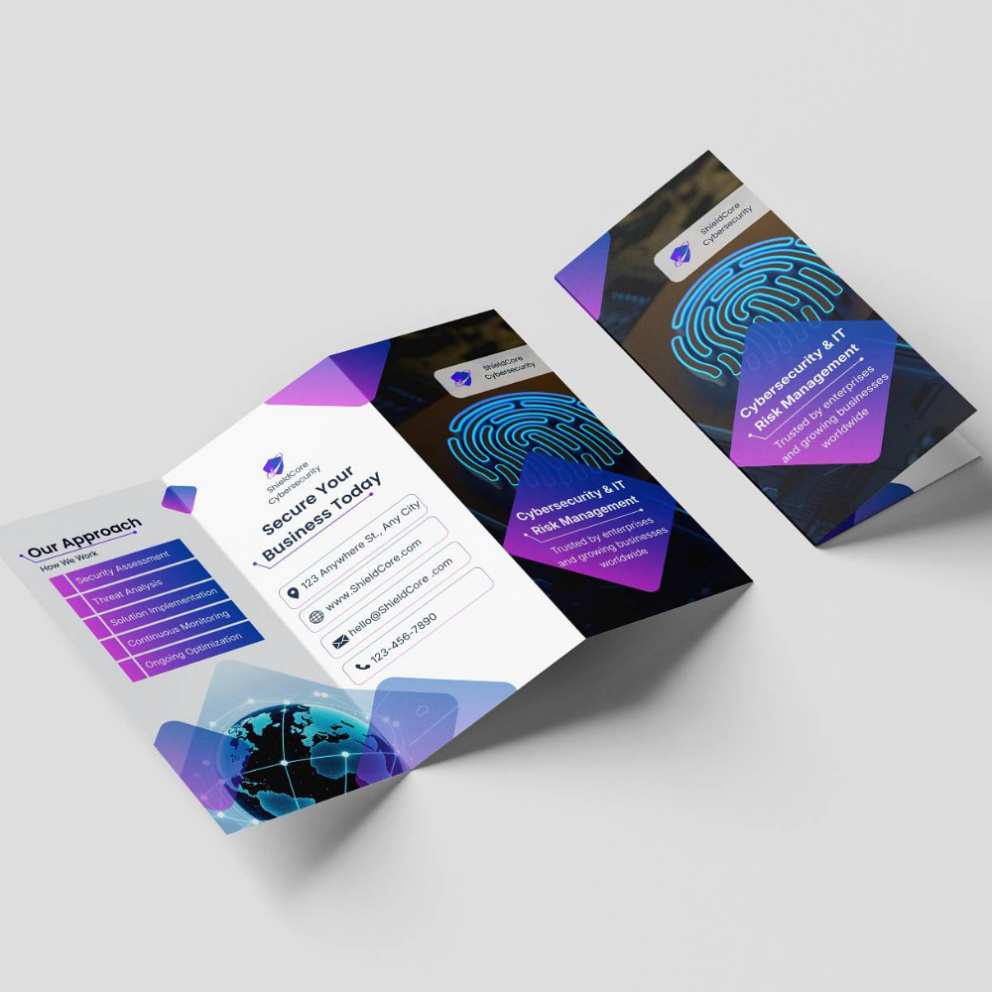
A refined cover increases perceived credibility before content is read.
2. Executive Introduction
An opening section provides context and direction. It may include:
- Company overview.
- Strategic positioning statement.
- Value proposition.
- Concise leadership note.
Clarity and brevity are essential.
3. Organized Service or Product Sections
Each offering should be presented using:
- Clear headings.
- Structured bullet points.
- Benefit-focused descriptions.
- Supporting visuals or icons.
Dense paragraphs reduce readability. A brochure must be scannable while remaining comprehensive.
4. Value Proposition & Differentiation
Strategic positioning must be explicit.
A strong brochure communicates:
- What differentiates the organization.
- What measurable value it delivers.
- Why stakeholders should engage.
Differentiation should be factual, concise, and aligned with market reality.
5. Supporting Proof & Credibility Signals
Where relevant, brochures may include:
- Key statistics.
- Certifications.
- Project highlights.
- Industry sectors served.
- Strategic partnerships.
Credibility increases when information is structured and verifiable.
6. Clear and Structured Call-to-Action
Even informational brochures require direction.
Common CTAs include:
- Contact our team.
- Request consultation.
- Schedule a meeting.
- Visit our website.
Without a defined next step, engagement momentum is lost.
Visual Architecture & Layout Discipline