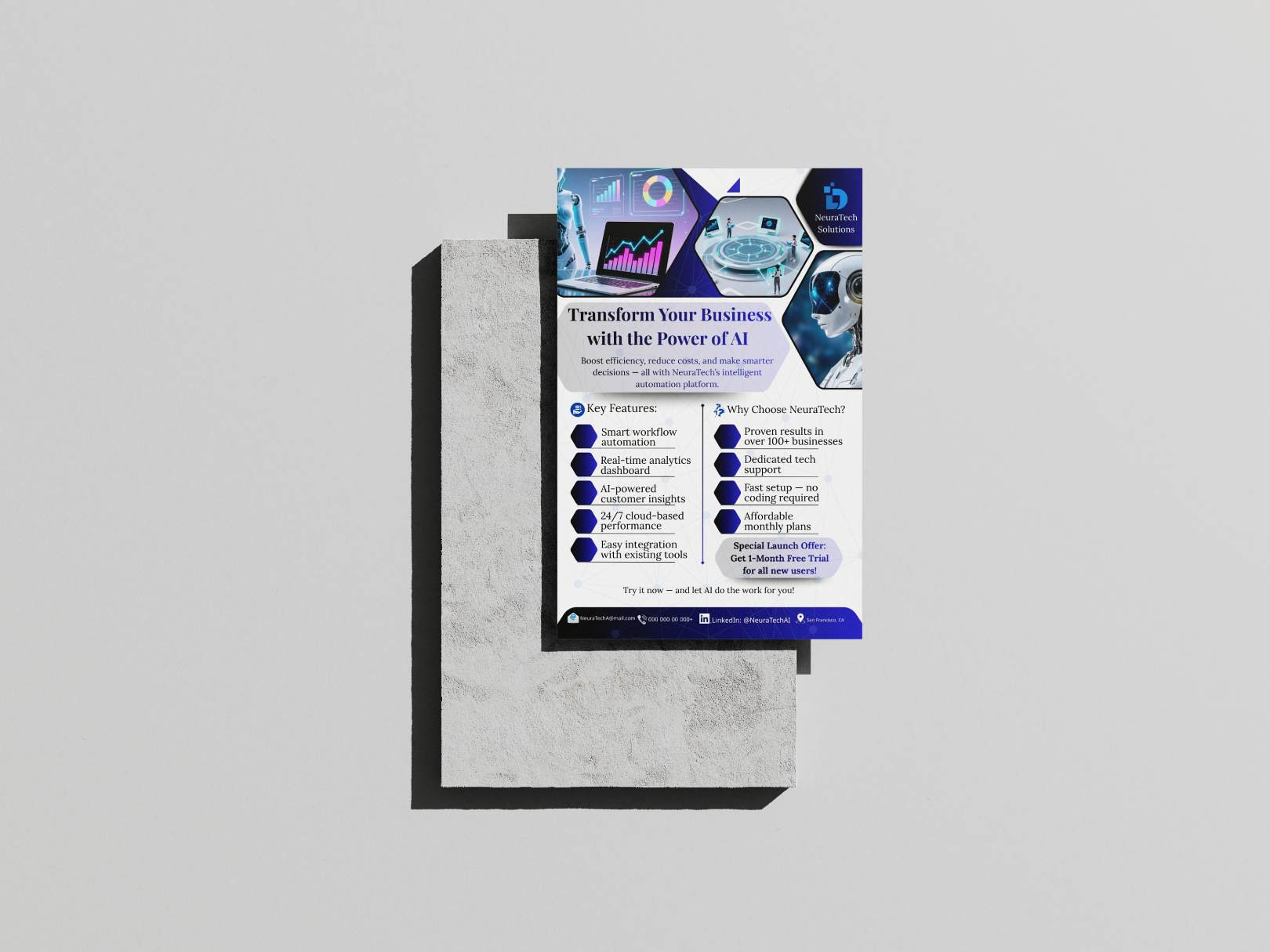
Strategic Flyer Design: Transforming a Simple Print Asset into a Powerful Marketing Tool
Introduction
In an increasingly digital business environment, printed marketing materials remain highly effective when executed strategically. Among them, the flyer continues to be one of the most direct, flexible, and cost-efficient communication tools.
However, not all flyers generate impact.
A professionally developed flyer is not simply a page with visuals and text. It is a structured communication asset designed to capture attention, deliver a focused message, and trigger a specific response within seconds.
This article outlines the strategic framework, design standards, content structure, and performance considerations required to create a high-impact business flyer.
The Strategic Role of a Flyer in Modern Marketing
Despite the growth of digital channels, flyers remain relevant because they offer:
- Direct audience targeting.
- Immediate message exposure.
- High distribution flexibility.
- Tangible brand presence.
- Cost-efficient campaign support
When structured correctly, a flyer can reinforce brand positioning while delivering a clear conversion objective.
Defining the Objective Before Design
The most common mistake in flyer development is starting with design before defining purpose.
A professional flyer must answer:
- What is the primary objective? (Awareness, promotion, event, sales).
- Who is the target audience?
- What action should the reader take?
- What differentiates this offering from competitors?
Every element on a flyer must support one measurable goal.
Core Components of a High-Impact Flyer
1. Compelling Headline
The headline is the most critical element.
It should:
- Capture attention immediately.
- Communicate value clearly.
- Be concise and readable.
- Align with the campaign objective.
Effective headlines avoid vague language and focus on benefit-driven messaging.
2. Structured Supporting Content
Flyers must be concise. Overloading with text reduces engagement.
Supporting content should include:
- Key benefits or features.
- Value proposition.
- Essential details only.
- Clear differentiation.
Information hierarchy is essential. The reader should scan the flyer within seconds and understand the core message.
3. Visual Hierarchy & Layout
Professional flyer design follows structured layout principles:
Cluttered layouts reduce credibility. Strategic spacing improves readability and impact.
4. Branding Consistency
A flyer represents the brand.
It must align with:
- Corporate color palette.
- Typography standards.
- Logo placement guidelines.
- Visual identity system.
Inconsistent branding weakens perception and reduces professionalism.
A flyer should look like part of a broader corporate ecosystem—not a standalone random design.
5. Call-to-Action (CTA)
Every flyer must guide the reader toward action.
Effective CTAs include:
- Visit our website.
- Contact our team.
- Call now.
- Scan the QR code.
- Register today.
- Claim your offer.
Performance analysis helps optimize future print campaigns and justify marketing investment.
Professional organizations treat print materials with the same analytical discipline as digital campaigns.
Common Flyer Design Mistakes
Even established businesses frequently make avoidable errors:
This disciplined workflow ensures that the final output supports both marketing and brand objectives.
Professional flyer design combines marketing strategy, brand management, and technical execution.
Conclusion: Beyond Design — Toward Strategic Communication
A flyer may appear simple, but its effectiveness depends entirely on strategic execution.
When properly structured, it becomes:
- A conversion-driven marketing tool.
- A reinforcement of brand identity.
- A support asset within broader campaigns.
- A measurable communication channel.
Organizations that treat flyer development strategically achieve stronger engagement, higher response rates, and improved brand perception.
In contrast, poorly executed flyers often result in wasted distribution efforts and diminished credibility.
Professional execution makes the difference.
Professional Call-to-Action
Elevate Your Marketing Materials with Strategic Precision
A flyer should do more than inform — it should influence and convert.
Partner with our team to develop professionally structured, brand-aligned, and performance-driven flyer designs tailored to your objectives.
Elevate Your Marketing Materials with Strategic Precision
Elevate Your Marketing Materials with Strategic Precision
A flyer should do more than inform — it should influence and convert.