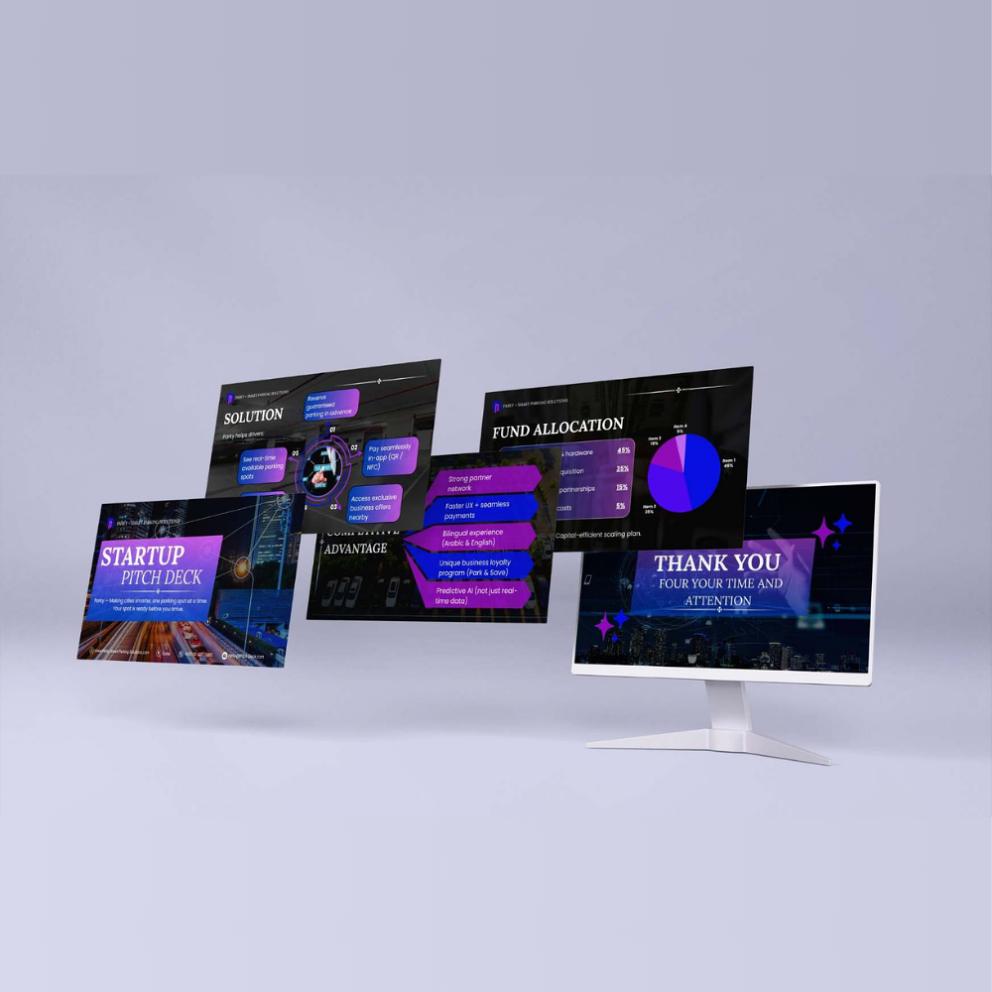
Developing a High-Impact Pitch Deck: Strategy, Design, and Executive Standards
Introduction
A pitch deck is more than a presentation. It is a strategic communication tool that defines your business vision, engages stakeholders, and convinces investors or partners to take action. In executive environments, clarity, structure, and visual storytelling are essential.
A well-crafted pitch deck demonstrates professionalism, operational understanding, and strategic insight while maintaining audience engagement. This guide presents a comprehensive approach to developing a high-impact pitch deck, covering structure, content, design principles, and executive considerations.
The Strategic Purpose of a Pitch Deck
A pitch deck serves multiple critical functions:
- Communicate vision and strategy: Present your business concept clearly and persuasively.
- Attract investment or partnerships: Provide concise evidence of potential and capability.
- Build credibility and trust: Demonstrate preparation, expertise, and professional standards.
- Guide decision-making: Ensure stakeholders understand your proposition quickly.
Unlike a traditional business presentation, a pitch deck must balance information density and visual clarity, conveying key points without overwhelming the audience.
Key Components of a Corporate Company Profile
1. Executive Summary Slide
- Company name, tagline, and mission statement.
- Quick snapshot of market opportunity.
- Highlight differentiating factors
2. Problem Statement Slide
- Clearly define the problem your business solves.
- Use data or insights to quantify impact.
- Make it relatable to investors and stakeholders.
3. Solution Slide
- Present your product or service as the strategic answer.
- Emphasize unique value proposition.
- Include visuals for clarity.
4. Market Opportunity Slide
- Market size, growth trends, and target audience.
- Competitive landscape highlights.
- Show potential return on investment.
5. Business Model Slide
- Revenue streams, pricing strategy, and monetization plan.
- Operational model for service/product delivery.
- Illustrate scalability and sustainability.
6. Traction & Milestones Slide
- Key achievements, KPIs, partnerships, or client wins.
- Include charts or infographics for impact.
- Demonstrates execution capability.
7. Marketing & Go-to-Market Strategy Slide
- Customer acquisition strategies.
- Brand positioning and awareness plans.
- Partnerships and channels.
8. Team & Governance Slide.
- Leadership and core team bios.
- Board or advisory highlights.
- Operational structure to show credibility.
9. Financials Slide
- High-level revenue projections, funding requirements, and key metrics.
- Visualize with simple charts and tables.
- Avoid overcomplicating for readability.
10. Call-to-Action / Investment Slide
- Clear next steps for investors or stakeholders.
- Contact details and engagement invitation.
- Reinforce urgency and opportunity.
Design and Presentation Principles
- Visual hierarchy: Ensure headings, subheadings, and body text are clearly distinct
- Typography: Use 1–2 professional fonts, maintain consistency
- Color palette: Align with brand identity, avoid overuse of colors
- White space: Enhance readability and premium appearance
- Infographics & data visualization: Clean, precise, and easy to interpret
- Consistency: Keep layout, margins, and formatting uniform across slides
Common Pitfalls to Avoid
- Overloading slides with text or data.
- Weak storytelling or unstructured flow.
- Generic visuals or low-quality imagery.
- Ignoring audience perspective (investor focus).
- Lack of clear CTA or next steps.
Tips for Executive-Level Impact
- Concise storytelling: Communicate key points efficiently.
- Data-driven evidence: Highlight measurable traction and results.
- Strategic sequencing: Present slides in a logical, persuasive flow.
- Update regularly: Reflect new milestones, metrics, or team changes.
- Professional tone: Maintain executive voice and credibility
A pitch deck is a strategic tool that combines vision, data, and storytelling to engage stakeholders and drive decisions.
When executed with precision, it becomes a powerful instrument for fundraising, partnerships, and brand credibility.